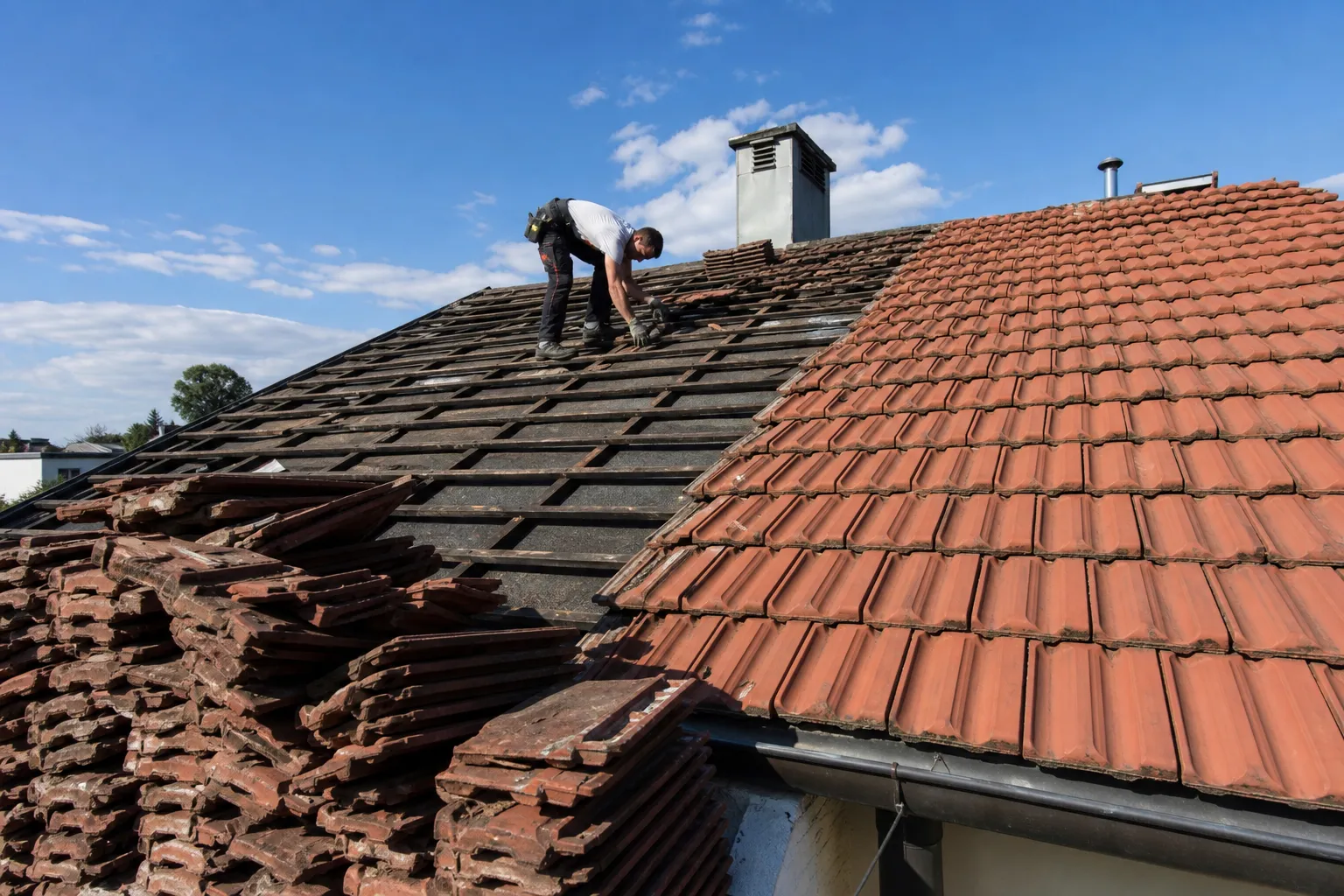
It is one of the most common questions homeowners ask us across the Blue Mountains: should I restore my roof, or is it time to replace it? The honest answer is that it depends on what the roof is actually made of, how far the wear has gone, and whether the underlying structure is still sound. A restoration can add many good years to a roof that is fundamentally healthy but tired-looking. A replacement is the right call when the roof has reached the end of its serviceable life. Choosing wrong in either direction costs money, so here is how a local roofer thinks it through.
The short version: renew versus rebuild
A roof restoration renews a roof you keep. On tile, that typically means a high-pressure clean, replacing broken or slipped tiles, re-bedding and repointing the ridge caps, then sealing and coating the surface. On metal, it means treating rust, replacing corroded fasteners and flashings, and recoating. The frame, battens and the bulk of the roofing material stay in place.
A roof replacement (also called re-roofing) removes the existing roof covering entirely and installs a new one, often with new sarking, insulation and flashings underneath. It is the option when the material itself is failing, not just the finish. Replacement is also your opportunity to change materials, such as a tile-to-Colorbond conversion.
Put simply: restoration fixes the surface and the details on a structurally sound roof; replacement rebuilds the roof when the covering has run out of life.
Signs your roof is a restoration candidate
Lean towards restoration when the problems are cosmetic, localised, or about the finish rather than the fabric:
- The roof looks tired, faded or streaked, but tiles are mostly intact.
- There is moss, lichen or dark staining (very common in the cool, moist upper Mountains) sitting on an otherwise solid surface.
- A handful of tiles are cracked or slipped, and the ridge capping is crumbling or lifting, but the field of the roof is sound.
- The roof is generally watertight, with no widespread leaks or sagging.
- Metal sheeting has surface rust or a chalky, flaking coating rather than holes rusted right through.
Cracked mortar along the ridge lines is one of the most frequent triggers for a call-out here. On its own that is a re-bedding and repointing job, often folded into a full restoration rather than a reason to replace the whole roof.
Signs it is time for a full replacement
Lean towards replacement when the covering, not just its coating, has failed:
- Widespread cracked, delaminating or crumbling tiles, where replacing individual tiles is no longer practical.
- Metal roofing rusted through, with perforations or corroded sheet edges that let water in.
- Persistent leaks in multiple places, water stains spreading across ceilings, or sagging that suggests the battens or structure are affected.
- An old, brittle roof that cracks further every time someone walks on it to make a repair.
- You want to switch materials, for example converting a heavy, ageing tile roof to lighter Colorbond steel.
If you are seeing active water ingress but are not sure how far it has spread, that is a job for leak detection before you decide anything. A single flashing failure is a repair; leaks in several spots at once often point to a roof near the end of its life.
What a restoration actually involves
A typical tile restoration runs through clean, repair, re-bed and repoint, then coat and seal. Metal restoration focuses on rust treatment, fastener and flashing replacement, and recoating. Done properly, it protects the roof and refreshes its appearance for a fraction of the disruption of a full re-roof, with no removing the entire covering, no exposing the interior. Our workmanship warranty on restorations is 7 years, conditions apply.
Restoration cannot, however, fix a roof whose material has genuinely failed. Coating a tile that is already delaminating, or painting over metal that is rusted through, only hides the problem for a season. That is why an honest inspection matters more than a sales pitch.
What a replacement involves
Re-roofing strips the old covering and builds back up: new sarking, insulation where needed, new flashings, and the new tile or metal covering itself. It is a larger project, but it resets the clock completely and lets you improve drainage, ventilation and even the roof's colour and weight. New roofs and replacements also carry our 7-year workmanship warranty; repairs carry 2 years (conditions apply). Note that any product warranty on the roofing material itself is separate and governed by the manufacturer's own terms.
The Blue Mountains factor
Local conditions genuinely change the calculation. Katoomba's weather station sits above 1,000 metres and records well over 1,400 mm of rain a year, so upper-Mountains roofs cop sustained moisture, fog and organic growth that lower-Mountains roofs around Glenbrook and Blaxland see less of. Mature eucalypts drop leaf litter that blocks valleys and gutters, holding water against the roof. All of that ages a finish faster than the material underneath, which often means a well-timed restoration, plus attention to gutters and drainage, keeps a sound roof going for years longer.
One caution: many older homes across the Mountains sit in heritage conservation areas, and heritage or bushfire status is always property-specific. If your home may be affected, changing the roof's visible form or material can require council approval, so check Blue Mountains City Council mapping before committing to a replacement that alters the roof's appearance.
Still not sure? Get it inspected
You cannot reliably judge a roof from the ground. A cracked ridge line and a bit of moss can look alarming on a perfectly restorable roof, while a tidy-looking roof can hide rusted-through valleys. The sensible next step is a proper roof inspection and condition report, which tells you plainly whether you are looking at a restoration, targeted repairs, or a replacement, with the reasoning laid out.
We offer free, no-obligation quotes and inspections right across the Blue Mountains, from Glenbrook to Mount Victoria. If you would like an assessment of your own roof, get in touch and we will give you a straight answer.
Frequently asked questions
Is restoration always cheaper than replacement?
Usually, yes, because it keeps the existing covering and structure. But restoring a roof that has genuinely failed is money wasted. The finish will not save material that is cracking or rusted through. The cheaper option is whichever one actually fixes the problem for the long term.
How long does a restored roof last?
A quality restoration on a sound roof can add many years of service and comes with our 7-year workmanship warranty. Longevity depends on the roof's condition going in, the material, and local exposure: moss, shade and leaf litter all shorten the life of a finish if drainage is neglected.
Can I convert my tile roof to Colorbond?
Yes. A tile-to-metal conversion is a common form of re-roofing. It reduces roof weight and changes the look. Because it alters the roof's appearance, check whether your property sits in a heritage conservation area before proceeding.
My roof only leaks in one spot. Do I need either?
Possibly neither. A single, isolated leak is often a straightforward repair: a flashing, a cracked tile or a valley. It is when leaks appear in several places at once that a bigger conversation about restoration or replacement is worth having.