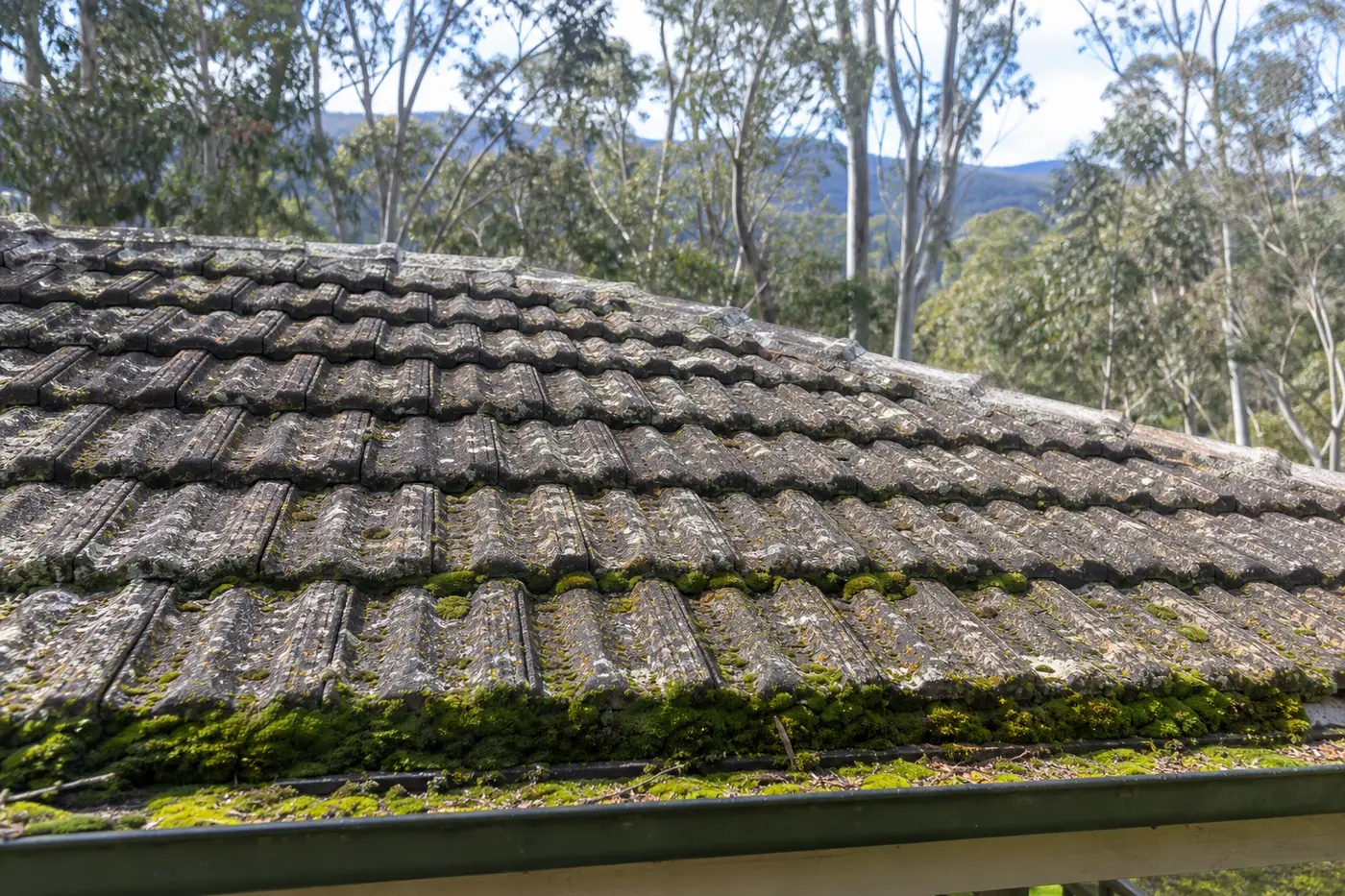
You back down the driveway one morning, glance up, and the roof has gone green. Not everywhere. It usually starts on the shaded side, or under the big gum that hangs over the back of the house, as a dark tinge that turns into soft green cushions over a season or two. Moss on a roof is one of the most common things people ask us about up here, and for good reason. The Blue Mountains grows it beautifully.
Why moss loves Blue Mountains roofs
Moss needs three things: moisture, shade and something to grip. We have all three in spades. The upper Mountains is cool and wet, well over 1,400 millimetres of rain a year around Katoomba, and the fog sits in long after the rain has stopped. Add mature eucalypts and cool-climate gardens shading half the roof, and a shaded south-facing slope stays damp for hours while a sunnier pitch on the same house has long dried out. Lichen, that flatter grey-green crust, and black mould turn up for the same reasons.
Leaf litter makes it worse. Every drift of gum leaves in a valley or along a gutter line holds water against the tiles and gives the moss a bit of organic matter to root into. The shadier and more treed your block, the faster it takes hold.
What the moss is actually doing up there
A light green film is mostly a cosmetic thing. Thick moss is not. The real problem is water. Moss works like a sponge, holding moisture against the tile long after it should have run off and dried. Concrete and terracotta tiles are porous, so water that sits on them soaks in, and constant damp breaks down the protective coating first and the tile itself later.
It also gets physical. As the clumps thicken they creep under the overlaps between tiles and lift them slightly, and that is enough to let wind-driven rain track back up and under. Moss and debris block the flow of water off the roof and into the gutters, so it pools where it should not. In the coldest upper-Mountains spots, water trapped in a mossy, porous tile can freeze on a hard frost and expand, which is hard on a tile that is already getting on. None of this happens overnight. It happens quietly, which is exactly why people leave it too long.
Why blasting it off yourself usually makes it worse
The instinct is to get up there with the pressure washer on full and hit it hard. I understand the appeal, and I would gently talk you out of it. A high-pressure lance strips the protective coating straight off an older tile along with the moss, and it can crack brittle tiles and force water up under the overlaps into the roof cavity. Terracotta and old concrete tiles turn fragile with age, and walking a wet, mossy roof to reach the far corners is genuinely dangerous, especially on the steep pitches and two-storey homes that are common here.
There is also the runoff to think about. Whatever you spray, moss included, ends up in the gutters, the downpipes and the stormwater, and some off-the-shelf moss killers are not something you want washing into a garden or a bushland block. This is one of those jobs where the do-it-yourself version tends to cost more than it saves.
How the moss actually comes off
Done properly, moss removal is patient rather than brutal. We clear the loose debris, treat the roof with a biocide that kills the moss, lichen and mould down at the root, then clean it with controlled, lower-pressure water rather than a blast that wrecks the surface. The treatment keeps working for a while after we leave, so the roof sheds regrowth instead of greening straight back up. On a roof that is otherwise sound, a proper roof clean and protective coating can take years off how the place looks and add years to how long the tiles last.
When a clean is enough, and when it is not
Most mossy roofs we look at are not worn out. They are dirty and neglected, and a clean, a repoint of the ridge caps and a fresh coat brings them right back. But moss can also hide real trouble: cracked tiles under the clumps, perished bedding along the ridges, rusted valleys packed with debris. Once the green is gone we can finally see the roof, and now and then what turns up means a clean on its own will not cut it. If you are not sure whether yours needs a tidy-up or something more, our guide on telling a restoration from a full re-roof walks through how to read the signs.
Keeping it from coming back
Moss is persistent because the conditions that grew it are still there. You will not stop the fog or move the gum tree, but you can slow it right down. Keeping the gutters and valleys clear of leaf litter is the single biggest thing, because dry tiles grow far less moss than tiles sitting under damp debris. Cutting back branches that overhang the roof lets more sun and air onto it. And a good protective coating makes the surface harder for moss to grip in the first place. On a heavily shaded block you may still need a wash every few years, but it becomes routine maintenance rather than a rescue job.
If your roof has gone green and you want to know whether it is just cosmetic or the start of something worse, the honest first step is a proper look. We give free, no-obligation inspections and quotes right across the Mountains, from Glenbrook to Blackheath, and our restoration work carries a 7-year workmanship warranty, conditions apply. Book in a roof clean and coating and we will tell you straight what your roof actually needs.