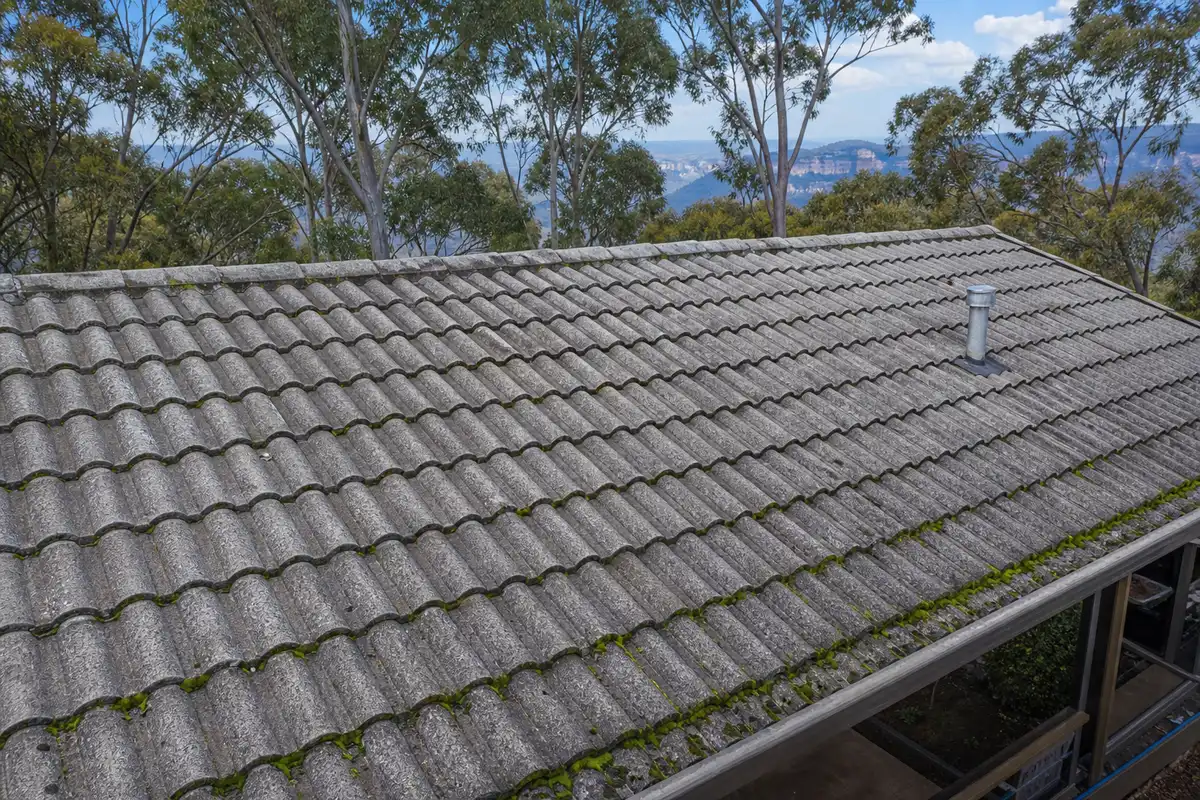
Most weeks someone asks us some version of the same question: how long does a roof last, and is mine near the end? Usually they have just noticed the roof looks tired, or a neighbour has had theirs redone, or they are weighing up a house they want to buy. It is a fair question with a slightly annoying answer, because the real lifespan of a roof depends on what it is made of, how well it went on in the first place, and what the weather has been throwing at it for the last few decades. Up here, that last part matters more than most people expect.
The honest answer starts with the material
The single biggest factor is what is actually up there. As broad, general figures for the roof types we see most across the Mountains:
- Concrete tiles are usually built to last around 50 years. The tiles themselves are tough, but the coloured coating on top fades and wears out long before the tile gives up.
- Terracotta tiles can last longer still, sometimes well beyond half a century. Terracotta keeps its colour because it is fired rather than painted, but older tiles get brittle and crack when someone walks on them.
- Colorbond and other steel roofing generally lasts several decades when it is installed and looked after. Its enemy is rust, which almost always starts at fixings, flashings and cut edges rather than in the middle of a sheet.
Those are ballpark numbers for the covering in good conditions. Keep them in the back of your mind, because the rest of this comes down to why real roofs so often fall short of them.
Why Blue Mountains roofs rarely hit the textbook number
Where your home sits changes the sum. The Bureau of Meteorology's Katoomba station is above 1,000 metres and records well over 1,400 mm of rain a year, so upper-Mountains roofs around Katoomba, Leura and Blackheath cop sustained moisture, fog and cool, damp conditions that lower-Mountains roofs near Glenbrook and Blaxland see far less of. Damp shade is exactly what moss and lichen need, and once moss and lichen take hold they hold water against the surface and lift tiles over time.
Then there are the trees. Mature eucalypts drop leaf litter into valleys and gutters, and a blocked gutter backs water up under the tiles instead of carrying it away. Wind exposure on ridgelines works at flashings and ridge caps. None of this destroys a sound tile or sheet overnight, but year after year it wears the finish and the details faster than the material underneath. A roof that might have reached 50 years in a mild, dry, treeless suburb often needs real attention a good deal sooner up here.
The tiles usually outlast the bits that hold them together
This is the part that surprises people. On most older roofs we look at, the tiles or sheets are still doing their job while the surrounding details have quietly worn out. The mortar bedding and pointing along the ridge caps cracks and crumbles. Flashings around chimneys and skylights lift or corrode. Valley irons rust. Fixings loosen. The old sarking under the tiles goes brittle.
That is why a 40-year-old roof can look structurally fine across the main field and still leak at the ridge, or drip into a bedroom every time it pours. The covering has years left; the weak points around it do not. Knowing that difference is the whole game, because it usually decides whether you are up for a modest repair, a full renewal, or a complete re-roof.
How to read where your roof is in its life
You cannot reliably judge a roof from the driveway, but there are honest signs worth watching for:
- The colour has faded badly, or the surface looks chalky, patchy or streaked with dark growth.
- Tiles are cracked, chipped or slipping out of line, and grit or granules are collecting in the gutters.
- The mortar along the ridge caps is crumbling, missing in places, or you can see gaps.
- On a metal roof, rust streaks are showing at screws, sheet ends or in the valleys, or the coating is flaking.
- There are water stains on ceilings or cornices, or a musty smell in the roof space after rain.
One or two of these on an otherwise solid roof usually points to maintenance rather than replacement. Several at once, especially active leaks in more than one spot, is the sign a roof is genuinely near the end. If you are not sure, a proper inspection from someone who gets up there and looks tells you far more than a guess from the ground.
You can add years, if you catch it in time
Here is the good news. Because the covering usually outlasts the finish and the details, a roof that is fundamentally sound but tired can often be renewed rather than replaced. A full roof restoration on tile typically means a high-pressure clean, replacing broken tiles, re-bedding and repointing the ridge caps, then sealing and recoating the surface. On metal it means treating rust, replacing corroded fixings and flashings, and recoating. Done at the right time, it resets the protective layer and buys a sound roof many more years of service. Our workmanship warranty on restorations is 7 years, conditions apply.
Keeping gutters clear, clearing leaf litter from valleys, and fixing a cracked ridge or a failed flashing early all stretch the life of a roof too. Most of the roofs we see written off before their time were not killed by the material failing. They were let go until the small problems became a big one.
When the clock has genuinely run out
Restoration cannot rescue a roof whose material has actually failed. Coating a tile that is already delaminating, or painting over steel that has rusted right through, only hides the problem for a season. Widespread cracking, sheets perforated by rust, sagging, or leaks appearing everywhere at once are the point where a full re-roof makes more sense than throwing money at the surface. If you are genuinely on the fence, our guide to whether to restore or replace walks through how we weigh it up. New roofs and replacements carry the same 7-year workmanship warranty; repairs carry 2 years, conditions apply. Any product warranty on the roofing material itself is separate and set by the manufacturer.
If you want a straight answer on where your own roof sits in its life, we offer free, no-obligation inspections and quotes right across the Mountains, from Glenbrook up to Mount Victoria. A quick look now often means a well-timed restoration instead of a full replacement later, which is the cheaper end of the conversation for almost everyone. Give us a call and we will tell you honestly what your roof needs and roughly how much longer it has.