It shows up after a big storm. A brown ring appears on the ceiling, often in a corner of the house where two rooflines meet, or above a hallway that sits under an awkward junction in the roof. The tiles look fine from the street. The gutters were cleaned not long ago. But the stain keeps growing every time it really pours.
When we get up on roofs like that, the valley is one of the first places we look. Roof valley repair is a job we do across the Mountains, and it's one most homeowners have never heard of until the day they need it. Below we explain what a valley actually does, why valleys fail up here, the signs to look for, and how we decide between fixing one and replacing it.
The valley carries more water than any other part of your roof
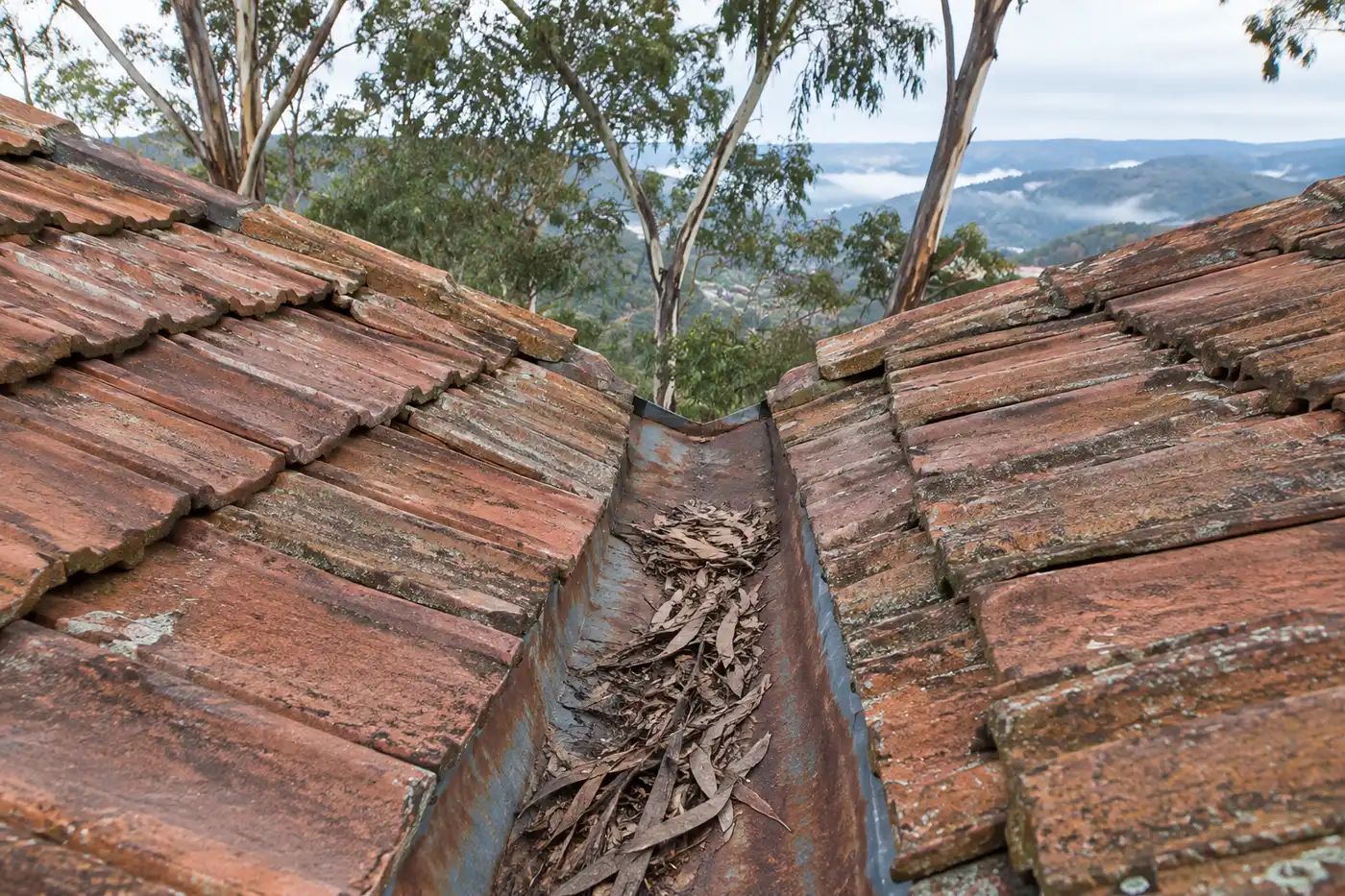
A valley is the channel that forms where two sloping sections of roof meet in an inside corner. Think of an L-shaped house: where the two wings join, the roof folds inwards and makes a V. Every drop of rain that lands on both of those slopes gets funnelled towards that V and runs down it to the gutter.
On a tile roof, that channel is lined with a strip of folded metal called a valley iron. The tiles on each side are cut on an angle and sit over its edges, so water runs off the tiles into the iron and away. Metal and Colorbond roofs have a valley too, usually a wider folded flashing that the sheets sit over.
Because a valley collects water from two slopes at once, it handles a much heavier flow than the open roof does. That is why a small fault in a valley tends to cause a bigger leak than a small fault almost anywhere else.
Leaves, rust and age are what wear valleys out up here
The original galvanised valleys on many older homes rust out after 20 to 30 years. Galvanising is a zinc coating on steel, and once it wears through, the steel underneath starts to rust. It usually begins as pinholes and spreads until the iron is thin enough to let water through.
Leaf litter speeds that up. On the heavily treed blocks that are normal in the Mountains, gum leaves and bark collect in valleys all year round. That wet mat holds moisture against the metal for weeks after rain, which is exactly what rust needs. Worse, a valley packed with debris can't carry water properly. In a downpour the water dams up behind the leaves and spills sideways, under the cut tiles and into the roof space.
The weather here doesn't help. The Bureau of Meteorology's Katoomba station records mean annual rainfall of around 1,411 mm, and storm rain arrives fast. A valley that copes with a steady shower can be overwhelmed by a short burst of heavy rain, which is why so many valley leaks only show up in the worst weather. (We cover that pattern in more detail in our guide to why roofs leak in heavy rain.)
A few other causes turn up regularly:
- Cut tiles along the valley that have slipped or cracked, letting water run past the edge of the iron
- Valley irons that were too narrow or poorly fitted in the first place
- Old mortar packed along the valley edge, now cracked and crumbling
- Dents from someone walking in the valley, which pond water
Most warning signs are visible from the ground
You don't need to climb onto the roof to spot most of these, and we'd rather you didn't. A pair of binoculars from the yard, or a look out an upstairs window, will tell you a lot.
From outside, look for orange or brown rust along the valley line, leaves and twigs banked up in the V, or tiles along the valley sitting unevenly. Thick moss along the valley is a clue too, because it means that area is staying wet.
Inside, the classic sign is a water stain on the ceiling under an inside corner of the roof. Leaks that appear only in heavy or wind-driven rain, and stay dry in light showers, point strongly at a valley or a flashing. If you can get into the roof space safely with a torch, damp or darkened timber running along the line of the valley is another giveaway.
Water travels before it drips, so the stain isn't always directly under the problem. That's one reason valley leaks get misdiagnosed and patched in the wrong place.
Clean, repair or replace: we decide once we're on the roof
Not every valley problem means a new valley. What we recommend depends on what we find up there.
The iron is sound, just blocked
If the metal is still in good condition and the leak came from debris damming the water, a thorough clean-out and reseating any slipped tiles may be all it needs. We'll also look at why it blocked, because overhanging branches or a nearby gutter problem will just fill it again.
The iron has rusted through
Once a valley has rusted through, it needs replacing. Patching badly rusted valleys doesn't hold long term. Sealant smeared over rust has nothing solid to grip, and the rust keeps working underneath it. You end up paying for the same leak twice.
Replacing a valley on a tile roof means lifting the cut tiles along both sides first, taking out the old iron and checking the timber underneath. The new valley goes in, then the tiles go back and the edges are bedded and pointed so they sit firmly and keep the weather out. On older terracotta roofs some tiles can break as they're lifted, so we check what replacements are available before we start.
The valley is one of several problems
Sometimes the valley is just one sign of a roof that is wearing out all over, with cracked ridge mortar, slipped tiles and tired flashings as well. In that case we'll tell you plainly whether a single repair makes sense or whether a wider restoration is the better use of your money.
Valley replacement is a regular part of our roof repair work across the Blue Mountains, on both tile and metal roofs, and repairs carry our 2-year workmanship warranty (conditions apply).
Four things decide what valley work costs
We don't quote valley work over the phone, because the price depends on things we can only see from the roof:
- How long the valley is, and how many valleys the roof has
- Roof pitch and access, which matter a lot on steep Mountains blocks
- The tile type, since brittle old terracotta takes more care to lift and relay
- Whether the leak has damaged battens, sarking or ceilings underneath
The inspection is free, and you get a fixed written quote before any work starts. For a wider picture of how repair jobs are priced, our breakdown of roof repair costs walks through the main variables.
A clear valley outlasts a neglected one
A new valley will last far longer if it isn't sitting under wet leaves. Keeping gutters and valleys clear is the single best thing you can do, especially where trees overhang the roof, and trimming back branches above the valley cuts the load considerably. On treed blocks, a professional clean timed around heavy leaf drop costs far less than a second valley.
It's also worth getting the valleys checked after any big storm, or whenever you notice leaves banking up from the ground. Caught early, a blocked valley is a clean-out. Left for a few winters, it's a replacement and a ceiling repair.
If you've got a stain under an inside corner of the roof or rust along a valley line, call us on (02) 4742 0922 or book a free roof repair inspection. We'll find where the water is getting in and give you a fixed price to fix it properly.