You climb into the roof space to dig out a box, and something is off. The air is thick and a bit damp. There are dark patches on the underside of the timber, maybe some white fuzz on the sarking, and a smell like a tent that got packed away wet. That is a roof space that cannot breathe, and up here it is far more common than most people expect. Roof ventilation is the quiet fix for it, and once you know what you are looking at, the signs are hard to unsee.
We get asked about vents most often after someone has spotted mould in a top cupboard or noticed the upstairs bedrooms are stifling by mid-afternoon in summer. Both come back to the same thing: air that has nowhere to go.
Why mountain roof spaces hold onto moisture
Two things work against your roof cavity in the Blue Mountains, and they pull in opposite directions.
The first is the weather outside. We get a lot of it up here. The Bureau's Katoomba station sits at 1,017 m and records around 1,411 mm of rain a year, and with that comes fog, long cool spells and stretches where nothing really dries out. Cold, damp air presses in from every side of the house for weeks at a time.
The second is warm, moist air from inside your own home. Showers, cooking, the kettle, drying washing indoors, even breathing overnight all put water vapour into the air. Warm air rises, and a good deal of it finds its way up into the roof space. When that warm, wet air meets the cold underside of the roof, it does exactly what a cold glass does on a humid day: it sweats. That is condensation, and in a sealed-up cavity it has nowhere to dry back out.
Give the roof space a low way in for fresh air and a high way out, and the whole thing keeps moving and drying. Seal it up, and the damp just sits there through winter.
What a roof that cannot breathe does to a house
None of it is dramatic on day one. It creeps. Left alone, a poorly ventilated roof cavity causes a few real problems.
Mould and mildew take hold on the timbers and the underside of the roof. Over years, that constant damp softens and rots structural timber, which is a slow and expensive thing to put right. Insulation is the sneaky one: batts that get damp mat down and stop trapping air, so they quietly lose a chunk of the R-value you paid for, and your heating works harder. You get musty smells drifting down into the top rooms and cupboards. And in summer the same trapped-air problem runs the other way, holding a pocket of baking heat right above your ceilings so the upstairs never quite cools off.
It is the same damp that grows moss and lichen across the outside of a Mountains roof, just working on the inside where you rarely look.
Signs your roof space is not breathing
You do not need to be up a ladder to notice most of these. If a few of them sound familiar, it is worth a proper look.
- A musty, damp smell in the top of the house or in built-in robes
- Dark staining, mould spots or a general grubbiness on the roof timbers and sarking
- Insulation that looks flat, matted or damp rather than light and fluffy
- Rusty nail tips or fixings poking through into the cavity, a classic sign of condensation dripping
- Upstairs rooms that are hot and airless well into the evening in summer
- Paint flaking or bubbling on top-floor ceilings and cornices
How a roof actually gets ventilated
Here is the part that surprises people. A vent on its own does very little. Airflow needs two things: a way in and a way out. Fresh air has to enter low down, usually through vents in the eaves or soffits, and stale, moist air has to leave high up near the ridge. Fit exhaust vents with no intake and you have half a system that mostly just sits there.
The common options you will hear about all handle that high exhaust in different ways:
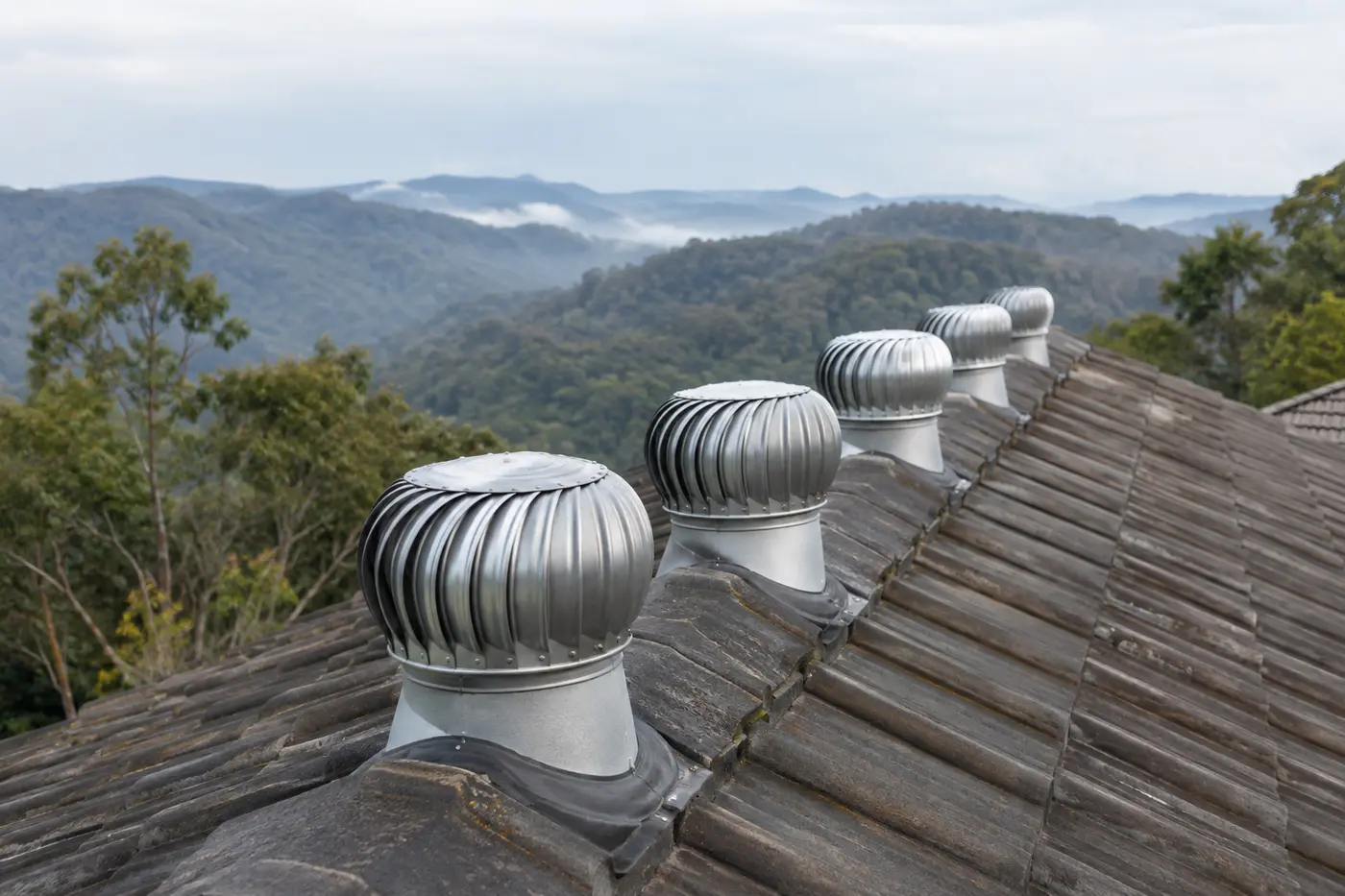
- Whirlybirds: the spinning turbine vents you see on ridges. Wind and rising heat turn them, drawing air out. Simple, no power, and usually fitted in pairs or more so they actually shift some volume.
- Ridge vents: a continuous vent run along the ridge line, tidy and low-profile, good for a longer roof.
- Powered and solar fans: a fan that pulls air out actively. Solar versions run off a small panel and cost nothing to operate.
- Eave and soffit vents: the intake side, letting fresh air in at the bottom so the exhaust up top has something to draw.
Which combination suits your roof depends on its shape, pitch, material and how the cavity is laid out. There is no single right answer, and more vents is not automatically better. This is genuinely not a job to eyeball from the ground.
Ventilation and sarking are not the same thing
People mix these up a lot. Sarking is the membrane that sits under your tiles or metal and manages water and vapour. Ventilation is about moving air through the cavity. They do different jobs, and on a cold, wet Mountains roof they work best together: the membrane controls the moisture, the airflow carries it away. If you are weighing up either, it is worth understanding how sarking under your roof handles moisture before you decide, because the two decisions often get made at the same time.
Does your roof actually need it?
Not every roof does, and I would rather tell you that than sell you vents you do not need. Plenty of older tile roofs up here already breathe reasonably well through the natural gaps between tiles. It is often the tighter, better-sealed homes, or roofs that have been recently recoated and closed up, that trap the most moisture and benefit most from proper airflow. Some cavities need intake added more than exhaust.
The only honest way to know is to look inside the roof space and read what is actually happening in there: the staining, the state of the insulation, the airflow, the moisture. That is part of a roof inspection that checks the condition of your roof space, and it is the sensible first step before anyone starts cutting holes in your roof.
If your top rooms smell damp, or you have seen mould where it should not be, get someone to take a look before another cold, wet winter sets in. We cover the Blue Mountains from Glenbrook to Blackheath, and a proper inspection tells you whether your roof needs ventilation, more intake, better sarking, or nothing at all. Call us on (02) 4742 0922 to book a roof inspection and find out where your roof space really stands.